

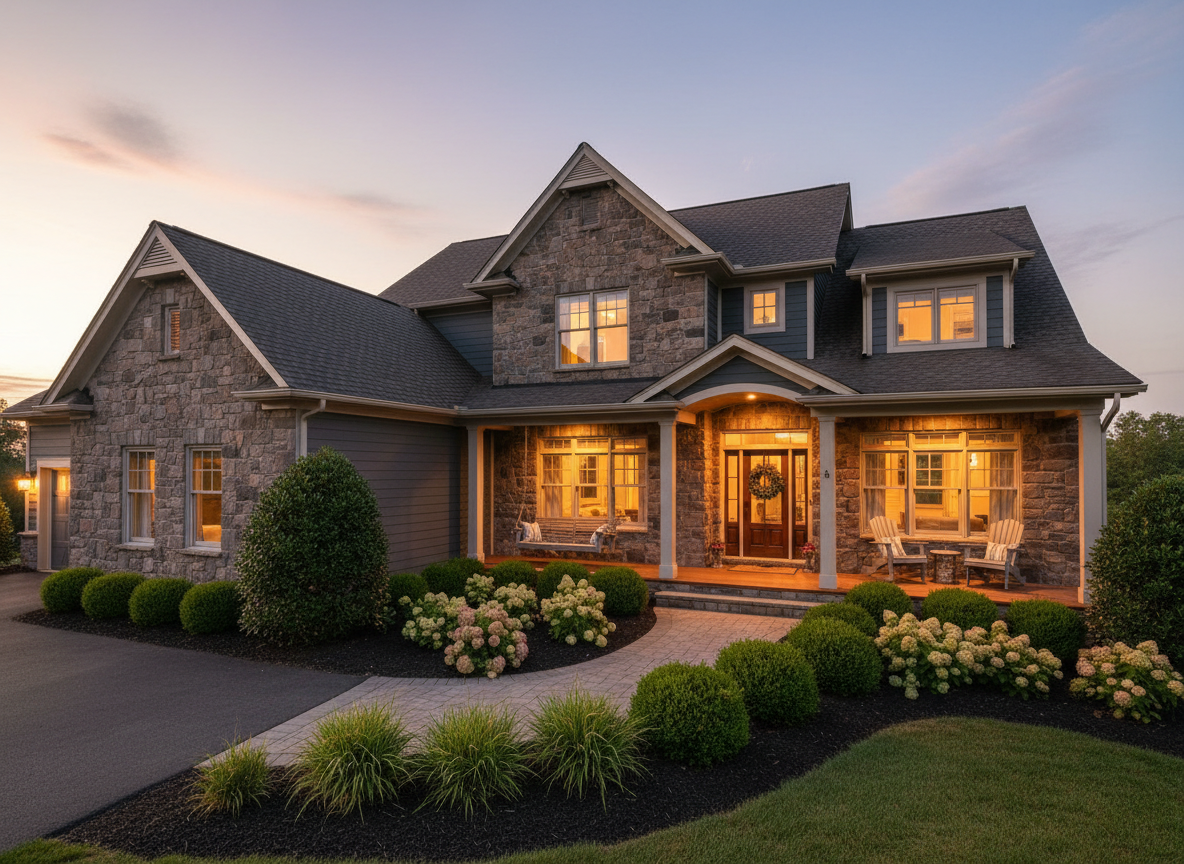
It takes seconds to type an address into an online valuation tool. That can be useful if you want a quick starting point. But if you’re actually thinking about selling, the more important question is not simply “What number does the algorithm produce?”
The better question is: How would buyers likely respond to this specific home in the current local market?
That is where a local, property-specific valuation becomes more useful than a generic automated estimate. The goal is not to produce a magic number. It is to understand the likely pricing range, what could influence buyer response, and what decisions may improve your position before the home ever reaches the market.
Automated estimates are useful—but limited
Automated valuation models can process large amounts of public and proprietary data very quickly. They may look at prior sales, square footage, lot size, bedroom and bathroom counts, tax records, and nearby transactions to estimate value.
That can be helpful for a rough benchmark. The limitation is that the model cannot fully understand the parts of a home that buyers actually react to when they walk through it.
Two homes with similar square footage can present very differently. Renovations, deferred maintenance, layout, curb appeal, finished space, lot characteristics, views, parking, natural light, basement quality, and even the immediate street can change how buyers perceive value.
An automated model may have data about the property. It does not walk through the front door.
The right comparable sales require judgment
Recent sales are essential, but selecting meaningful comparables is not always as simple as choosing the closest homes with similar bedroom counts.
A sale may look comparable in a database while differing substantially in condition, location, lot, renovation level, garage space, finished basement area, or buyer appeal. A home that sold a few blocks away may be less relevant than one slightly farther away if the properties are more alike in the features buyers actually care about.
A useful local valuation should explain not just which properties sold, but why those sales are—or are not—good comparisons.
Current competition can matter as much as past sales
Sellers are not competing only with homes that sold months ago. They are also competing with the homes buyers can choose from right now.
That means current listings, pending properties, days on market, price reductions, and the quality of competing homes can all affect strategy. If three similar homes are already available nearby, your pricing and presentation may need to account for that. If very little comparable inventory exists, the opportunity may look different.
The market is dynamic. A valuation based only on closed sales can miss what buyers are seeing and comparing today.
Condition changes both value and marketability
Condition affects more than the final price. It can affect which buyers are interested, how quickly they act, what they expect during inspections, and whether they view the home as move-in ready or as a project.
A kitchen remodel may add appeal, but renovation dollars do not automatically translate dollar-for-dollar into sale price. The same is true for roofs, windows, HVAC systems, bathrooms, flooring, landscaping, and cosmetic updates.
The better question is usually not “How much did I spend?” but “How will buyers compare this home with the alternatives available to them?”
Location is more specific than the city name
Even within the same city or neighborhood, value can shift based on the immediate setting. Traffic, views, topography, parking, lot shape, proximity to commercial areas, street appeal, and neighboring properties can all influence how buyers react.
That is especially important in older Cincinnati and Northern Kentucky communities where housing stock and street conditions can change quickly from block to block.
Pricing strategy is different from estimated value
A home may have a reasonable estimated market range, but the eventual list price is a strategic decision. Sellers may want to consider competition, likely buyer search ranges, recent market activity, property condition, timing, and how much uncertainty exists around the home.
Pricing too high can reduce early interest and create longer market time. Pricing too low may leave money on the table if demand is strong. The right strategy depends on the specific property and the market at the time you list.
A useful valuation should help you understand that distinction instead of presenting one number as if it were guaranteed.
Timing can change the answer
The likely value of a home is not frozen in time. Inventory, buyer demand, interest rates, seasonality, nearby listings, and recent sales can all change the picture.
If you are several months away from selling, an early valuation can still be useful. It can help identify what to watch, what improvements may be worth considering, and whether the market needs to be revisited closer to the actual listing date.
A valuation should help you decide what to do next
You may not be ready to list. That’s fine. A useful valuation can still help you answer practical questions:
- Is selling realistic at the price range I have in mind?
- Which improvements are worth considering before listing?
- What problems could affect buyer response?
- How does my home compare with what is currently for sale?
- Would I be better off listing now or preparing for later?
- How might the sale fit with the purchase of my next home?
Those questions are often more useful than a single headline estimate because they connect value to an actual decision.
What Betsy’s home-value analysis looks at
Betsy’s home-value process is built around the actual property and the local market rather than a generic instant estimate. Depending on the home, that can include recent comparable sales, active competition, location, condition, improvements, lot characteristics, parking, layout, and other features that may affect buyer response.
The goal is not to promise a sale price before the market has spoken. It is to give you a clearer, more realistic picture of where the property may fit and what your options look like.
If you are simply curious, that is enough reason to start. You do not need to have a listing date or a fully formed moving plan before asking what your home may be worth.


Leave a Reply